Cost and return
What the project costs to build and to open, what it should earn once it has settled, and the return that leaves for the owner.
Alorie · Services · Feasibility & concept
Service 03
Most of what a hotel will earn is settled before anything is built: what the site can carry, who it is for, and what it costs to make that real. Feasibility answers those questions in numbers, and the concept turns the answer into a product an architect can draw.
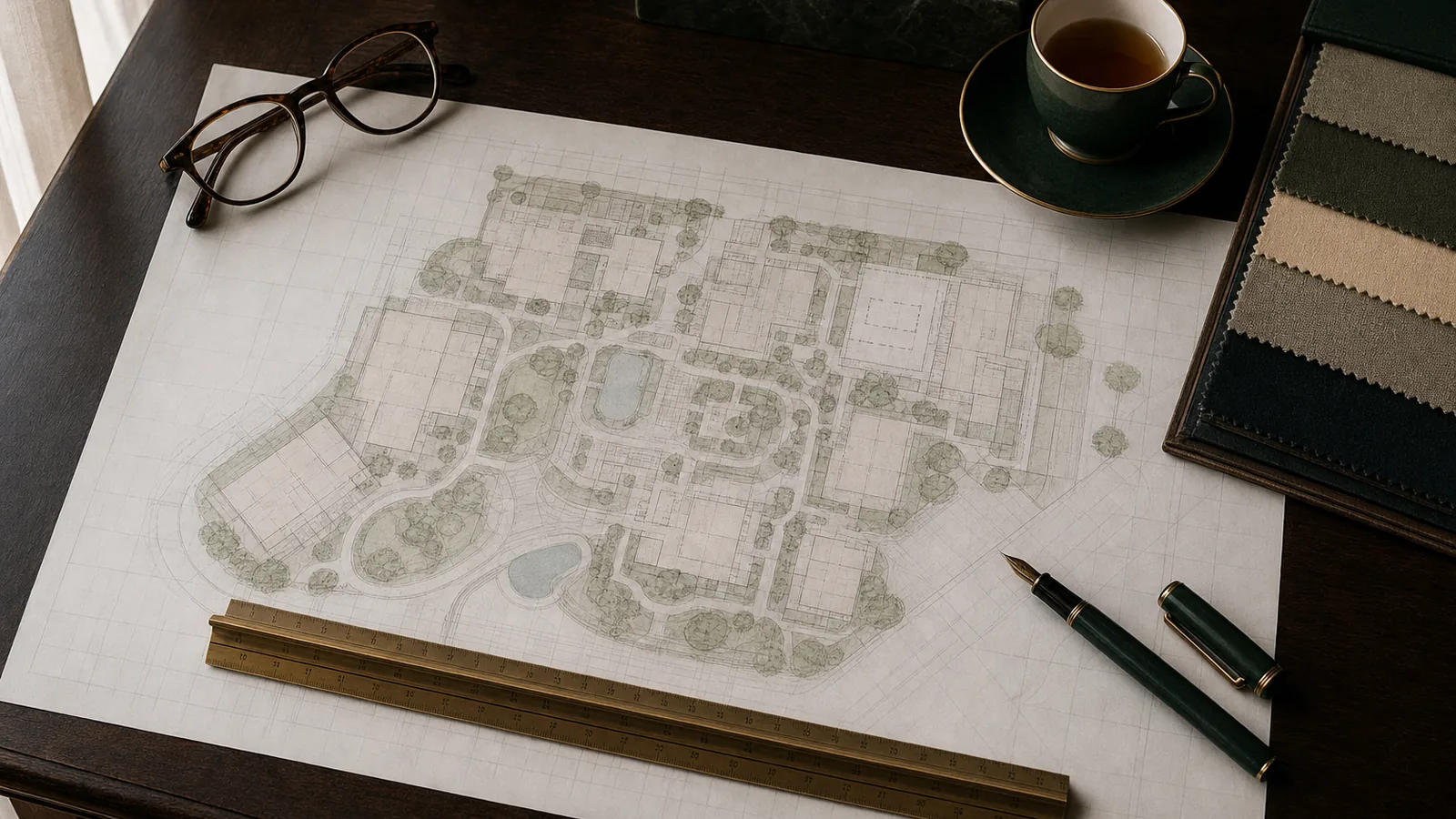
Before an owner commits to a project, the cost of it and the return on it need appraising properly. That is the whole purpose of a feasibility study: not a document to satisfy a lender, but a test of whether the thing should be built at all — at that size, on that site, at that price.
We build a business model around the answer. Financial planning is only part of it; the rest is a business plan and a marketing strategy that say where the demand will come from, at what rate, and what has to be spent to reach it. An owner holding all three can decide with numbers rather than optimism.
A study that only ever says yes is not a study. We would rather tell you to resize the project than watch it open too big.
Where the answer is no, or not yet, we say so early — while the decision still costs a fee rather than a building.
Six questions, in one document, with the workings shown.
What the project costs to build and to open, what it should earn once it has settled, and the return that leaves for the owner.
Demand around the site, the competitive set the property will be measured against, and the segments a hotel of that size can realistically reach.
Rooms, food and beverage and the other revenue lines; the operating shape behind them; the staffing and the cost base each one carries for the life of the hotel.
What has to be true for the numbers to hold — occupancy, rate, cost of money, the opening date — and what happens to the return when each of them moves.
Positioning, rate strategy and the channels that will fill the first year, planned far enough ahead to be contracted rather than improvised.
Proceed, resize, reposition or stop — in writing, with the reasoning attached, so the decision can be put in front of a board or a lender.
A concept starts with the owner's vision, and our work is to make it practical. We come in at the first conceptual stage and settle the product the site can carry, who it is for, how a guest moves through it, and where it sits against the properties it will compete with. All of that is decided before a single drawing is finalised.
It also means choosing the people who will draw it. We help select and negotiate with the architect, the interior designer, the lighting, landscape and environmental consultants and the kitchen specialist — the right practice for the project, and terms written to suit the owner rather than the practice.
Then the plan itself. We provide space planning for every component of the hotel, front of house and back: store rooms, offices and staff facilities as much as kitchens, restaurants and public rooms. Back of house is where a badly planned hotel loses money quietly, every year it operates.
Out of the feasibility, the budget and the location comes the last decision of this stage — the classification and the standard the site can actually support. A standard set one notch above what the market will pay for is a cost the hotel carries for its whole life.
Not every project starts with a site. Owners, lenders and investors come to us with an operating hotel to buy, an operator to appoint or an asset to value, and want an independent read on it before anything is signed.
We assess the asset, the operator or the acquisition on its merits: the condition of the building, the contracts attached to it, the capital expenditure that has been deferred, and what the operation is actually earning against what it reports. We hold no relationship with any operator that needs protecting, so the findings are simply the findings.
A flag is a decision, not a default. It brings distribution, a reservation system and a standard the market already recognises, and it costs fees and a measure of freedom. On some projects that trade is worth making; on others it is not, and the study should say which.
Alorie is an authorised representative of Dusit International in Malaysia. Where a project suits one of Dusit's brands we can put the site in front of the right people there with a feasibility view and a concept already done, then act for the owner through the terms that follow — for the owner, not for the brand.
Where an independent identity will earn more, we say so and help build it: the positioning, what the property stands for, the standards its team is held to and the yardsticks guests and the market will judge it by. A brand is only useful once it is written down clearly enough that a housekeeper and a travel agent read it the same way.
A mandate at this stage produces documents an owner can act on, not a presentation.
Three steps, and the first one costs nothing.
Tell us about the asset and the ambition. No commitment either way: we would rather know early whether we are the right people for the project.
We assess the opportunity honestly and show you what performing looks like for a property of that kind, on that site, in that market.
We agree the scope — this stage alone, or the whole journey from concept through construction to opening — and begin.
Concept, feasibility and planning mandates across Malaysia, Indonesia and Vietnam. Each is listed at the stage the work reached.
A mixed development in Melaka, taken to planning. Alorie gave technical planning assistance.
A hotel and residence at Tanjung Kling, Melaka, taken to concept. Alorie did the concept development and the feasibility work.
A pool-villa resort at Sikuati on the north coast of Sabah, taken to concept. Concept, feasibility and technical assistance.
A pool-villa resort at Kuala Penyu, Sabah, taken to concept. Concept, feasibility and technical assistance.
A sky-villa resort in Tabanan, Bali, taken to concept. Alorie did concept, feasibility, technical and pre-opening work.
A wellness resort at Silverlakes, Batu Gajah in Perak, taken to concept. Concept, feasibility, technical and pre-opening work.
A tented villa camp on Phu Quoc, Vietnam, taken to concept. Alorie wrote the concept and the design brief.
A mixed development of soho units and residences at Sentul, Kuala Lumpur, taken through to building-plan approval.
One email is enough: where the property is, what stage it is at, and what you need. We read every enquiry ourselves and reply personally.
Alorie Hospitality Management · L-3-7, Plaza Damas, 60 Jalan Sri Hartamas 1, Sri Hartamas, 50480 Kuala Lumpur, Malaysia